Timeboxed personal projectNextbike · Consumer mobile · 2 weeks

Helping riders know when a trip can end—and what to do when the system disagrees.

Over two weeks of dedicated effort, I combined feedback from six Berlin riders with public reviews, narrowed the scope to the end-of-ride journey, and checked a focused return flow with the same cohort.

Role

UX research · Product design

Week 1

6 riders + focused review scan

Week 2

Focused end-ride prototype

Evaluation

Same 6 riders · directional

Personal project; no access to Nextbike's location systems, internal data, or production roadmap.

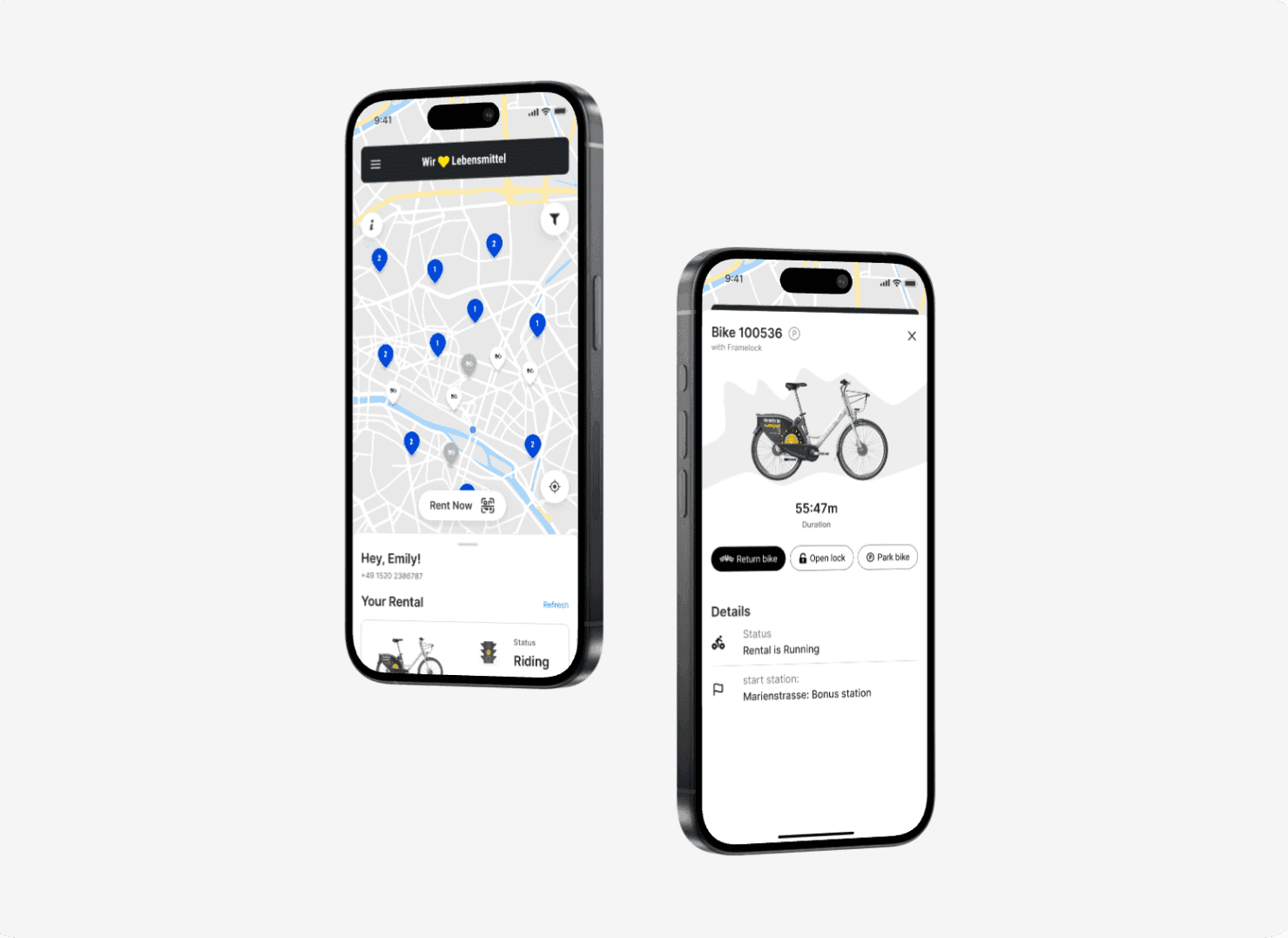
Two polished Nextbike redesign screens showing the bike map and an active rental
Original high-fidelity screens from the Nextbike redesign.

Week 1

Understand and frame

Focused review scan, six short rider conversations, synthesis, and a deliberate decision to centre the case study on parking.

Week 2

Prototype and check direction

High-fidelity parking flow, rapid map and support explorations, a same-cohort walkthrough, and final refinements.

01 · Week 1 · Research signal

The interface showed a result. Riders needed to understand the state behind it.

During week one, I combined six short convenience-sample conversations with a focused public-review scan. The sample is narrow, but one pattern appeared repeatedly: riders could not tell what the app believed about their parking until consequences appeared.

“I always end up paying extra for incorrect parking—even at a parking location.”

Participant, Berlin · symptom reported; root cause unknown
01

Before ending

Is the app detecting this as valid?

02

After ending

What evidence did the system use?

03

After a fee

How do I challenge the outcome?

6 short conversations · BerlinAge 20–30Convenience sampleWeek-one discoveryFocused public-review scan

02 · Week 1 · System framing

The design can clarify detection. It cannot guarantee location accuracy.

The concept separates interface responsibility from infrastructure responsibility. That boundary is important: clearer UI can prevent confusion and preserve evidence, but it cannot repair GPS, zone data, or operational policy.

Future-state model · not included in the tested prototype

01

Detected eligible

02

Detection uncertain

03

Detected outside

04

Rider confirms

05

Evidence saved

06

Dispute if needed

Interface can improve

State visibility, detection freshness, confirmation, saved evidence, and direct dispute entry.

Requires product infrastructure

Location precision, zone accuracy, fee policy, evidence retention, and support operations.

03 · Week 2 · End-ride prototype

The real prototype makes the prevention layer tangible.

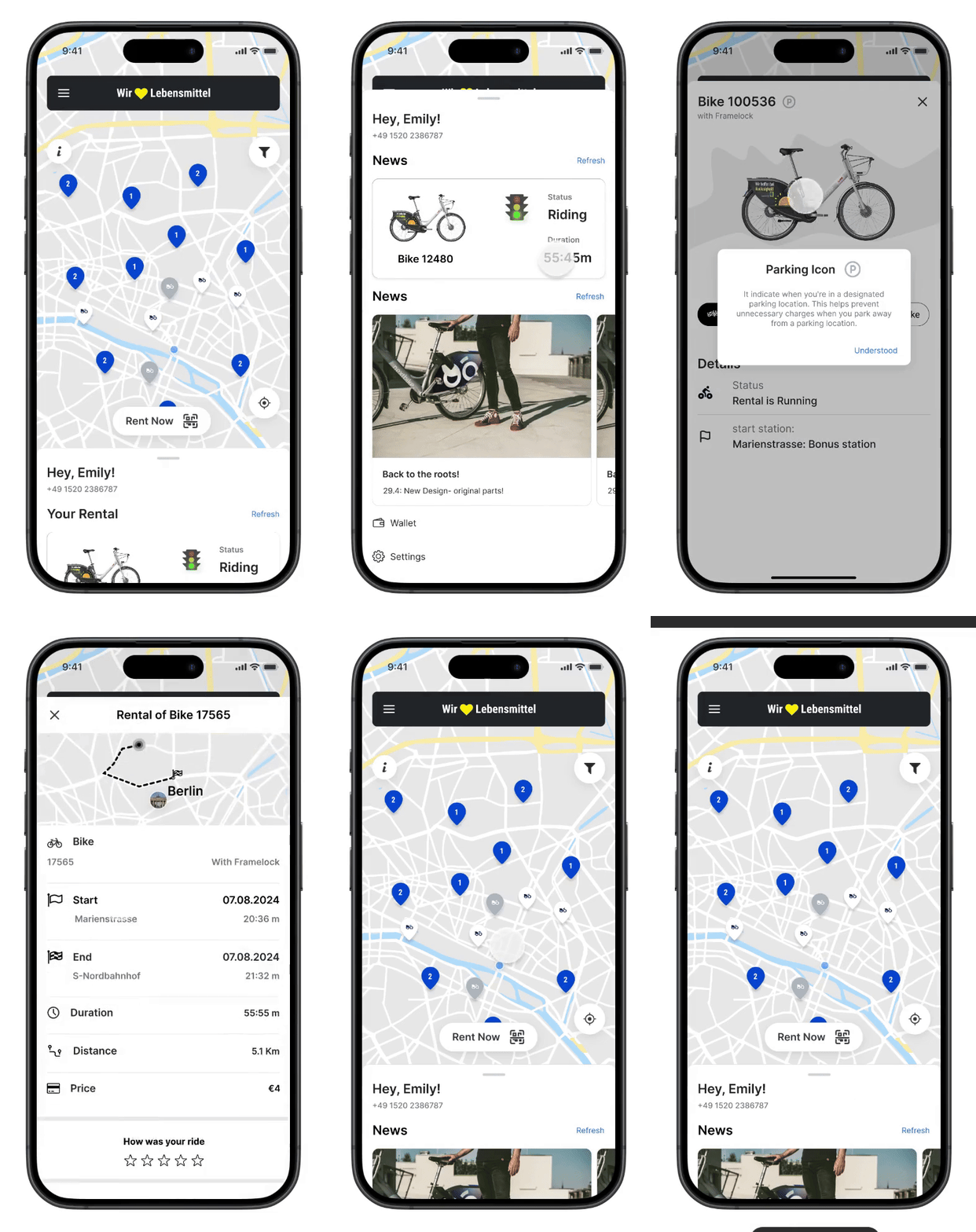
During week two, I turned the parking signal into a focused high-fidelity flow: active-trip status, parking guidance, return confirmation, and a visible route into post-trip support.

Animated Nextbike parking flow from active rental through bike return and trip summary

Original prototype · animated

Parking guidance stays connected to the rental journey.

01

Show parking context during the active trip.

Riders can check the relevant action before reaching the end-of-ride moment.

02

Explain the return step in context.

Parking guidance and the return action live inside the rental detail flow.

03

Keep recovery discoverable after return.

The trip summary exposes a visible route for reporting a problem with the rental.

Next iteration, not shown as tested UI

Low-confidence detection, timestamped evidence, and a prefilled fee-dispute path remain product recommendations in the system model above.
04 · Week 2 · Directional evaluation

The useful evidence was where riders hesitated—not a small average-rating change.

During week two, the same six participants joined a lightweight walkthrough comparing the live app and prototype across bike finding, parking interpretation, and issue recovery. Reusing the cohort fit the timebox, but it limits independence; comparing a live product with a prototype limits the result further.

01

Interpret parking

Participants more readily found parking guidance within the active rental.

Next evidence

Test outdoors with changing GPS confidence.

02

End the ride

The return sequence improved perceived control, but invalid-zone guidance needs field testing.

Next evidence

Measure errors and hesitation during return.

03

Report a problem

The post-trip issue route was easier to locate and understand.

Next evidence

Validate with real support operations.

Limitations: self-imposed two-week timebox, n=6, convenience sample, same participants, prototype fidelity, and no formal timing or field instrumentation. Findings are directional—not evidence of product or business impact.

05 · Week 2 · Secondary explorations

Useful ideas that were not the core case-study claim.

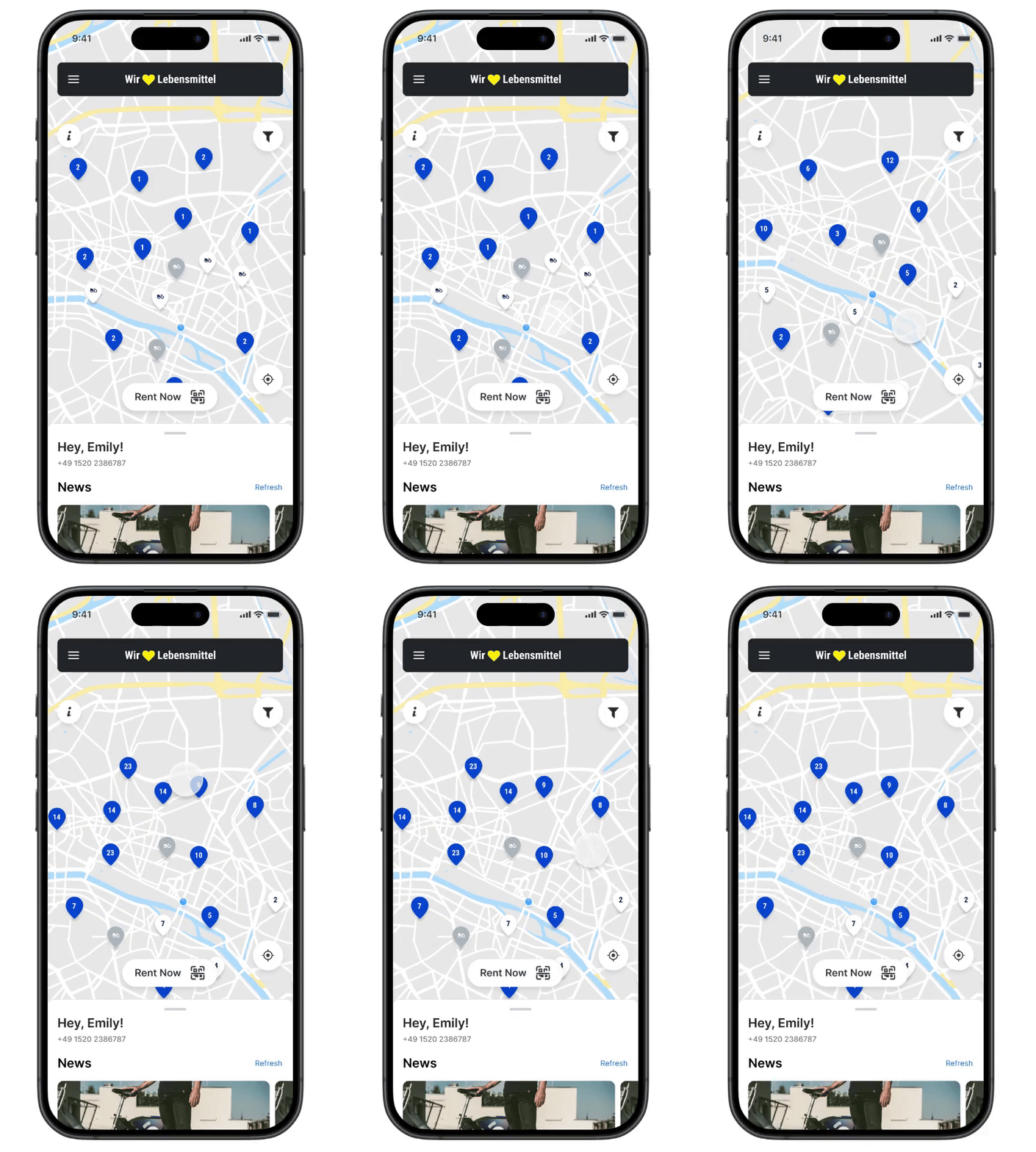
To stay inside the two-week timebox, I focused evaluation on parking. Map density and support visibility remained rapid supporting explorations rather than separate validated workstreams.

Animated Nextbike map flow showing progressive bike and station density

Progressive map density

Reveal stations and individual bikes as zoom level narrows, matching the rider's area → station → bike decision sequence.

Test: bike-finding success and time

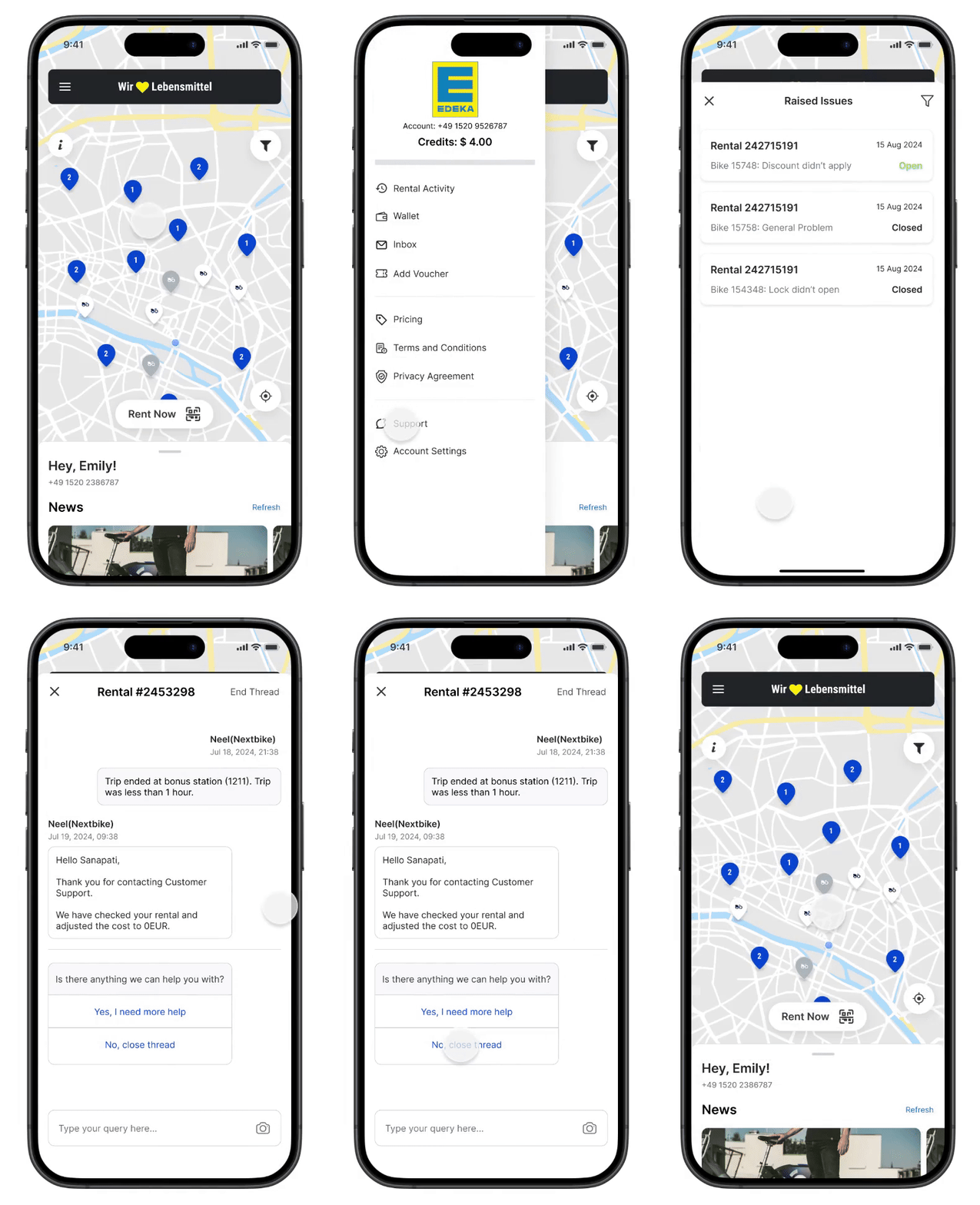
Animated Nextbike support flow showing issue status and in-app messaging

Issue tracking and messaging

Keep issue status and an asynchronous support thread in the app without promising instant live-chat responses.

Monitor: resolution time and repeat contacts

06 · Reflection

The mature design move was defining what the interface could not solve.

A visible parking state is useful only when it communicates uncertainty honestly and connects prevention to recovery. The next meaningful test belongs outdoors, with instrumented location states and real support constraints.

01

Focus deeply

The two-week constraint made one high-consequence journey more useful than five disconnected pain points.

02

Design uncertainty

Unknown and stale states deserve explicit interaction patterns.

03

Measure behaviour

Task success, errors, hesitation, complaints, and dispute resolution matter more than a blended preference score.